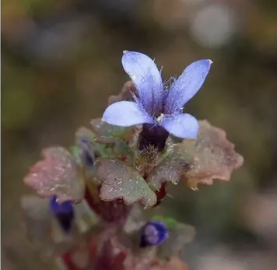
A rare high-altitude alpine plant has been recorded in India for the first time in over a century and a half. Scientists from the Botanical Survey of India (BSI) located the Cyananthus hookeri, a purple-blue flowering herb belonging to the bellflower family (Campanulaceae), within the high-elevation zones of Arunachal Pradesh’s Tawang district. The unique specimen was last documented in the country by British botanist Sir Joseph Dalton Hooker during an expedition to Sikkim in 1867.
The field exploration, conducted near the Chuna Valley at an altitude of approximately 3,600 meters, revealed a small colony containing fewer than fifty mature individuals growing along rocky and alpine slopes. Given the highly restricted distribution and small population size observed during the field research, the scientific team has recommended that the species be designated as endangered under the national criteria established by the International Union for Conservation of Nature (IUCN).
The detailed findings, compiled by BSI researchers Subhajit Lahiri, Monalisa Das, and Sudhansu Sekhar Dash, were published in the international biodiversity conservation journal Oryx. While the dwarf herb is known to exist across adjacent high-altitude terrains in Nepal, Bhutan, and China, the recent breakthrough marks its first confirmed botanical occurrence within the borders of Arunachal Pradesh.