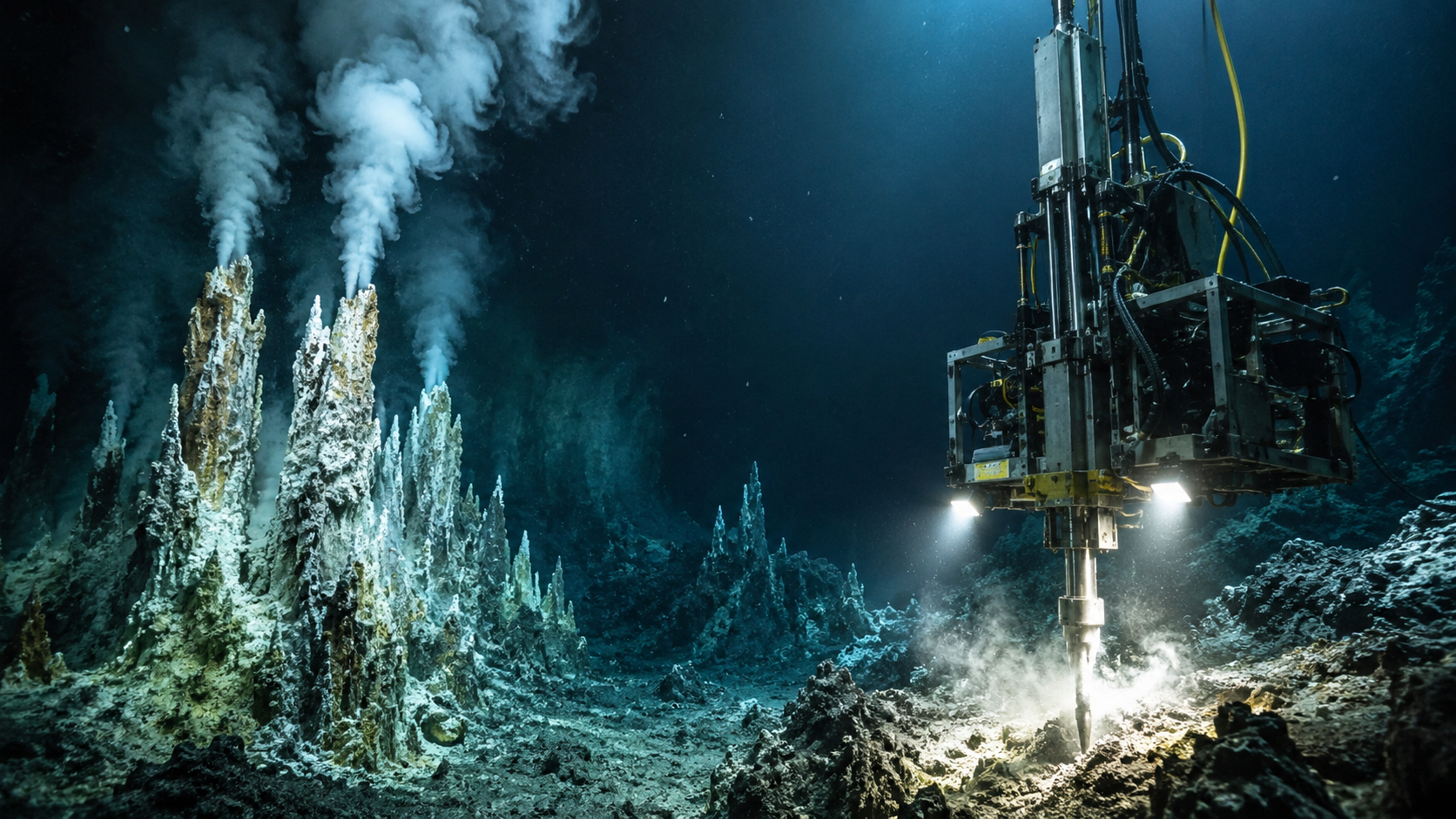
Deep-sea researchers have identified the hidden hydrothermal reservoirs sustaining one of Earth’s most isolated underwater ecosystems. In a study published in Geochemistry, Geophysics, Geosystems, scientists participating in the International Ocean Discovery Program’s Expedition 399 detailed a 2023 drilling mission inside the Atlantis Massif mountain, located north of the Lost City hydrothermal field. The team successfully excavated a 1.3-kilometer borehole through mantle rocks like peridotite and gabbro.
At sub-seabed depths between 675 and 800 meters, fluid testing revealed that up to 80% consisted of natural formation water. Geochemical analysis showed an absence of magnesium alongside elevated levels of calcium, lithium, and strontium. This distinct signature indicates that the fluids previously interacted with deep crustal rocks at temperatures exceeding 300 degrees Celsius. Crucially, this chemical composition closely matches the hydrogen- and methane-rich fluids discharged by the Lost City’s famous white carbonate chimneys.
The discovery provides critical evidence explaining how these aphotic ecosystems remain continuously active without solar radiation. Because the chemical energy generated by these water-rock reactions mirrors potential sub-surface environments on icy moons within our solar system, the data offers invaluable models for extraterrestrial astrobiology.