SUMMARY
- Mansukh Mandaviya has announced that aggregator platforms will be required to register their gig workers on the e-Shram portal soon.
- The government’s initiative follows a series of strikes organized by gig workers this year in protest against poor working conditions.
- As of August 2024, the portal has registered 30 crore workers.
In response to the growing demand for enhanced social security benefits for gig workers, Labour and Employment Minister Mansukh Mandaviya has announced that aggregator platforms will be required to register the details of their gig workers on the e-Shram portal soon.
“An online window will be made available for aggregators to ensure a smooth and efficient registration process,” Minister Mandaviya stated on Sunday, September 1. ” This is a significant step towards acknowledging and formalizing the roles of gig and platform workers within our economy.”
During a review meeting, the minister emphasized that companies employing gig and platform workers will be tasked with the responsibility of registering their employees on this portal.
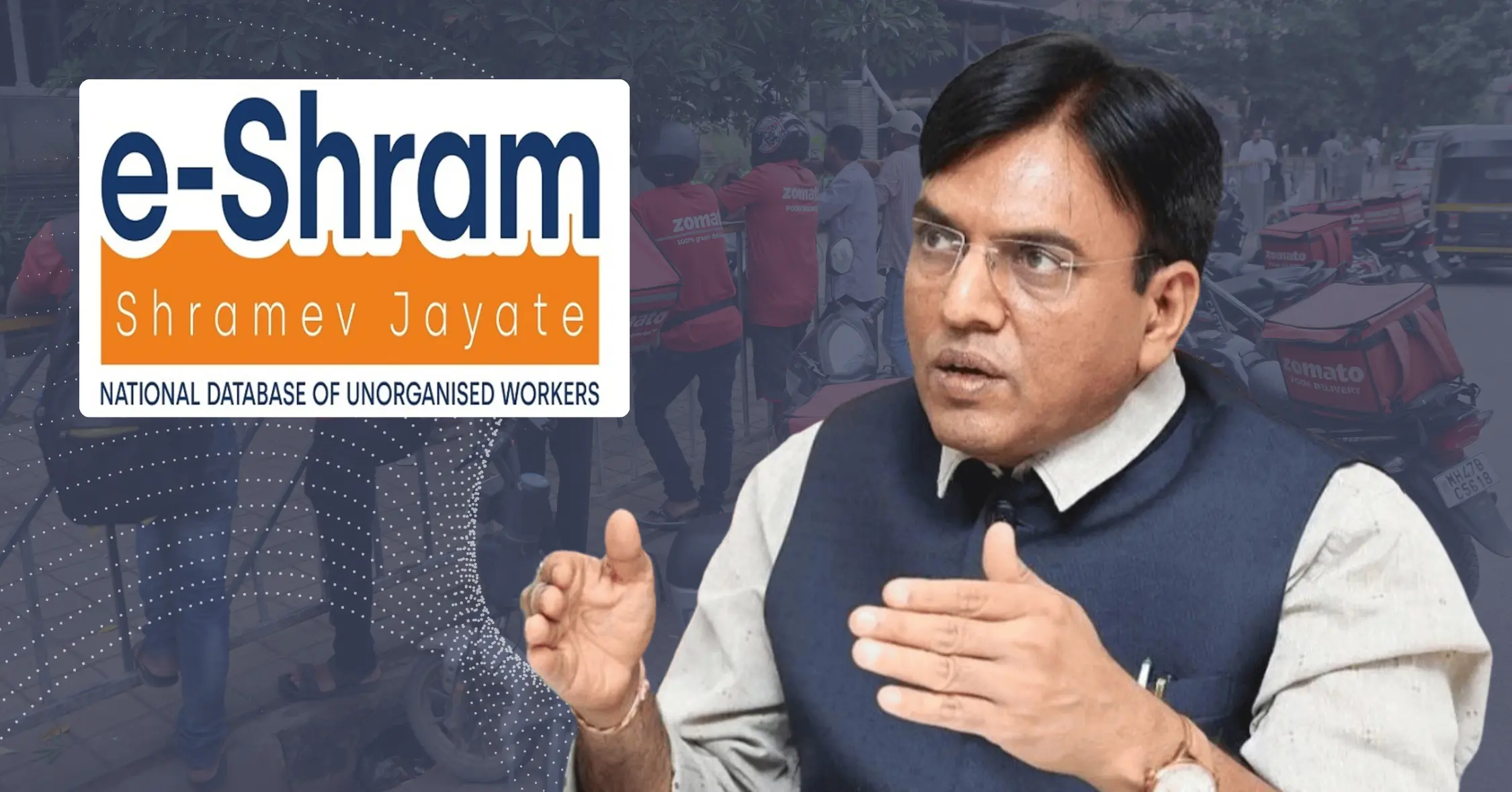
Established in 2021, the e-Shram portal serves as a national database for unorganized workers, encompassing migrant workers, construction workers, and gig and platform workers. Following registration, these workers receive a Universal Account Number (UAN), which will integrates all their existing Member Identification Numbers into a single identifier. As of August 2024, the portal has registered 30 crore workers.
Moreover, Minister Mandaviya highlighted the government’s efforts to integrate unorganized workers into social security schemes. He mentioned that every worker in India, regardless of their employment status, is entitled to social security benefits under the Code on Social Security.
Introduced in 2020, the Code on Social Security aims to revise and strengthen the laws related to social security to extend social security benefits to all employees and workers.
The government’s initiative to establish social security norms for gig workers follows a series of strikes organized by gig workers this year in protest against poor working conditions. In August, auto and taxi drivers in Delhi NCR took to the streets to protest against cab aggregators such as Ola and Uber.
Additionally, Urban Company’s women gig workers organised a strike at the startup’s Bengaluru office in June this year to voice their concerns over the company’s new terms of reference. At the time, the gig workers alleged that the work conditions at the company were “horrific” and subjected thousands of partners to conditions close to slavery.
Fairwork India has ranked Ola, Uber, Dunzo, and Porter as the lowest-performing companies on its index concerning the working conditions of gig workers.
As per the Economic Survey 2023-24, it is projected that the gig workforce in India, which is the third-largest economy in Asia, will expand to 23.5 million individuals by 2029-30, marking a nearly tripling increase from the 7.7 million workers estimated in 2020-21.
While the emergence of the gig economy has opened up employment prospects for the youth, individuals with disabilities, and women, the survey indicates the necessity for efficient social security measures for gig and platform workers, both within India and on a global scale.