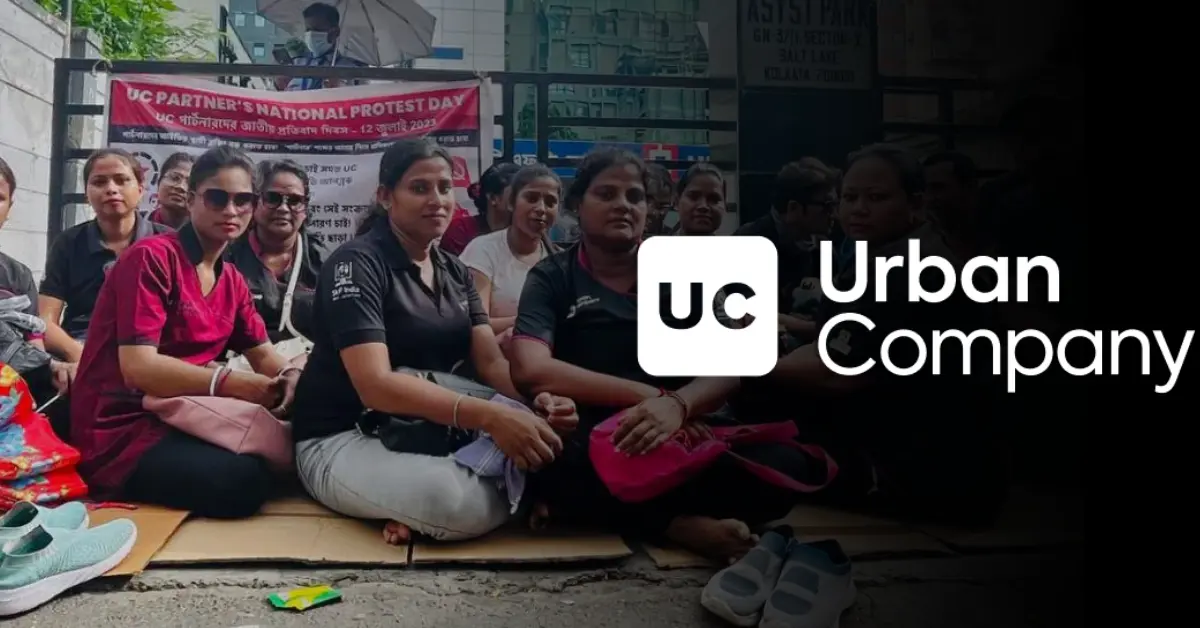
Women gig workers affiliated with the Gig and Platform Services Workers Union (GIPSWU) staged a protest at Urban Company’s Bengaluru office, opposing the platform’s new work policies. GIPSWU, aligned with the Indian Federation of App-Based Transport Workers (IFAT), organized the protest, drawing “hundreds” of participants.
The protest targets Urban Company’s ‘Mission Shakti,’ a program launched last year to enhance service quality. Workers contend that the mission imposes “horrific” conditions, requiring a minimum rating of 4.8 and automating task assignments. They allege the policy permits only two cancellations per worker per month, risking job loss for additional cancellations. Despite discussions with the startup, workers claim no actions have been taken.
Urban Company has not yet commented on the protest. However, GIPSWU‘s statement emphasized that the new terms of reference undermine workers’ rights, violating various legal protections. The union has written to Urban Company’s co-founder and CEO, Abhiraj Singh Bhal, urging reconsideration of the policies.
The strike in Bengaluru is the latest in a series of protests against Urban Company. In July 2023, unions such as the Centre Of Indian Trade Unions (CITU) and All Indian Gig Workers Union (AIGWU) protested at the startup’s Gurugram office. Similar protests occurred in June 2023.
Urban Company, founded in 2014 by Bhal, Raghav Chandra, and Varun Khaitan, offers diverse services including salon and massage, home cleaning, appliance repair, and painting. Despite these challenges, Bhal recently announced on LinkedIn that Urban Company turned profitable before tax in April 2024, emphasizing the platform’s commitment to profitable and sustainable growth while prioritizing customers, service partners, employees, and shareholders.
As GIPSWU considers a nationwide strike, the ongoing dispute highlights the growing tensions in the gig economy over worker rights and platform policies.