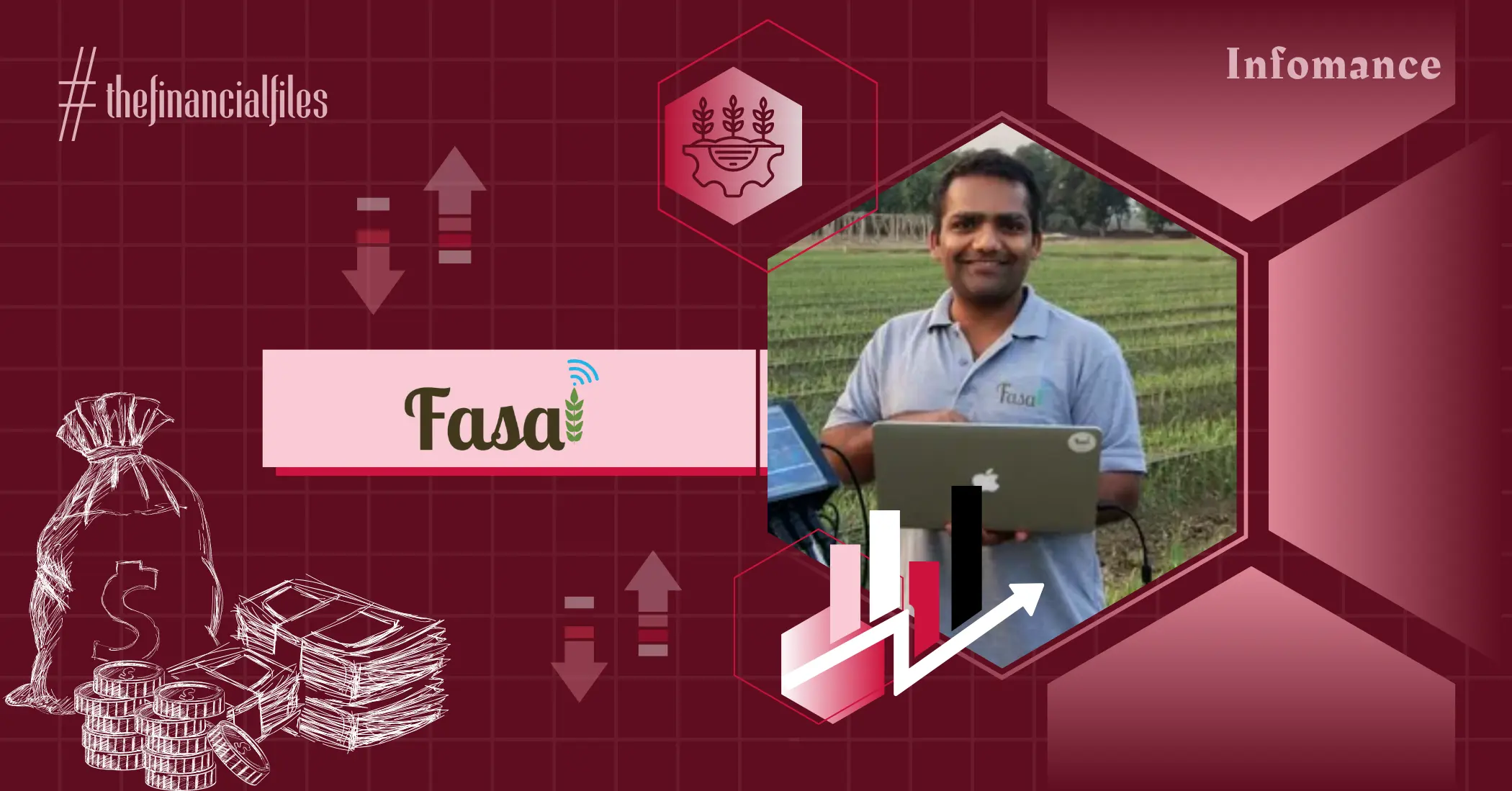
Agritech startup Fasal’s revenue from operations for the financial year ended March 31, 2024, stood at Rs 34 crore with 89% YoY growth, up from Rs 18 crore in the previous fiscal, according to the company’s Registrar of Companies (RoC) filings.
First reported by Entrackr, Fasal secured $12 million led by TDK Ventures and British International Investment (BII) in December last year. It appears that the funding has assisted the startup to some extent as it has generated a mere Rs 58 crore revenue since its inception in 2018.
Founded in 2018 by Shailendra Tiwari and Ananda Prakash Varma, Fasal uses AI, crop sciences, and IoT to get crop-stage inputs for better resource utilization and improved yields. Yet, only about 9% of the overall Revenues- Rs 3 crore originated from these services. At the same time, Fasal received 91% of the total income from the sale of fruits.
In the case of the agritech model which pivoted to a supply chain, the cost of material acquisition was the most significant expense accounting for 47% of the total expenses. This cost increased by 83% YoY to Rs 33 crore in FY24. Employee benefits, legal, advertising cum business promotion, packaging, forwarding, and other overheads led to a rise in the overall cost to Rs 70 crore in FY24 from Rs 52 crore in FY23.
The AI-powered agritech was able to limit its losses in FY24 because of the rise in fruit sales by Rs 30 crore. On a unit level, the firm had to spend Rs 2.06 to earn a rupee in the fiscal year ending March 2024. So far, Fasal has secured $18 million in funding including the pre-series of $4 million in 2021. The startup’s ROCE and EBITDA margins stood at -45.7% and -80% respectively. With a 15.99% stake, Omnivore is its largest external shareholder, followed by 3One4 Capital.
Many agritech startups start with big plans to revolutionize farming using technology but struggle to make a significant impact. They often shift focus to selling produce at higher prices than traditional sellers, which can lead to quality and cost issues. Trying to expand too quickly can drain resources. Success in this industry is tough, and startups need to rethink their strategies to stand out and thrive.