SUMMARY
- PM Modi commits to supporting the semiconductor industry and highlights India’s potential as a key global player.
- PM pledges stable regulations and skill development to boost India’s semiconductor sector.
- He emphasizes India’s semiconductor growth through reduced compliance and skilled talent.
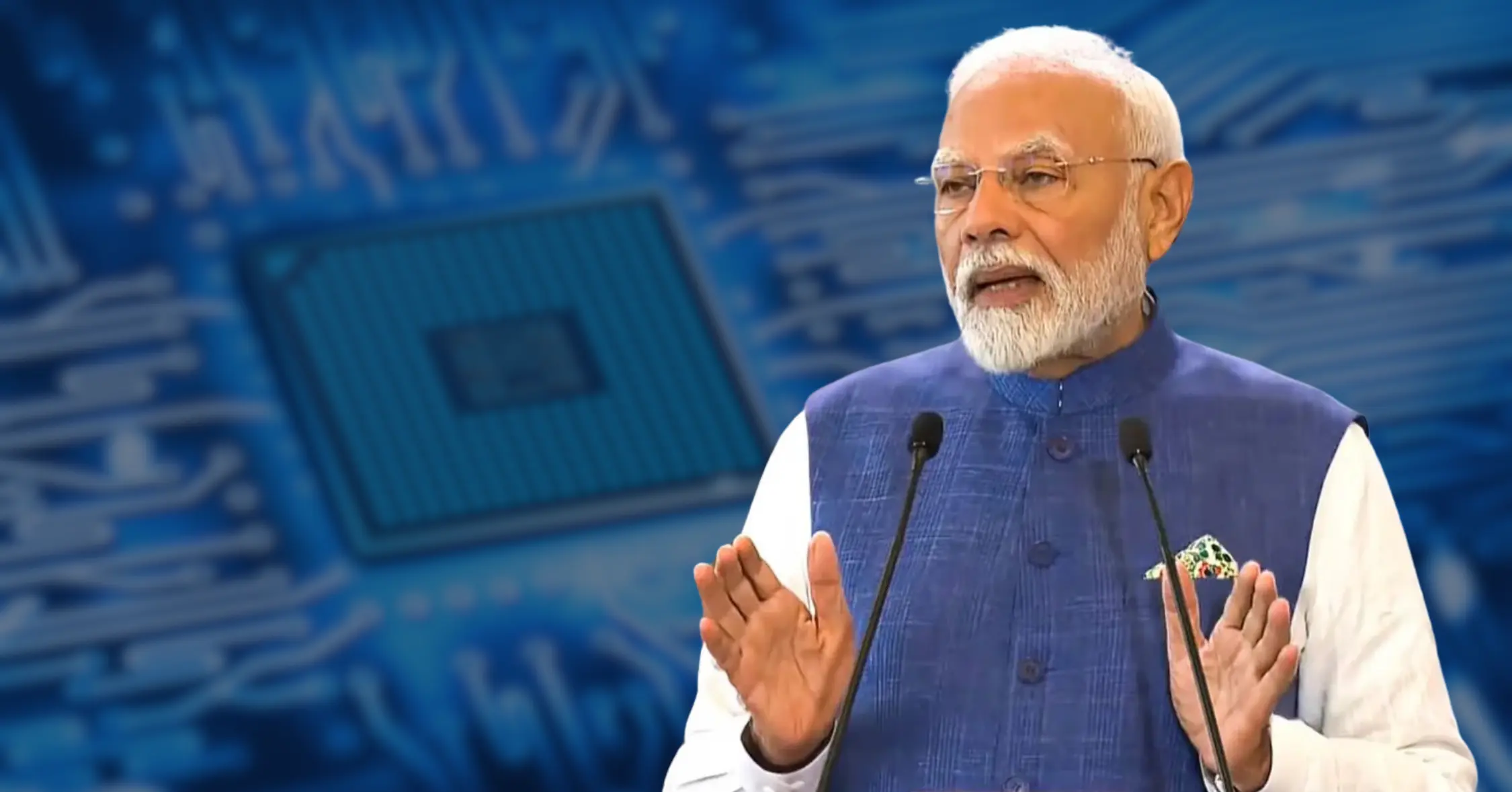
Prime Minister Narendra Modi has assured the top semiconductor company executives that India will continue to help the semiconductor industry at “every step.” According to a government release, the executives praised India’s dedication to the expansion of the semiconductor industry and the vast potential of the sector within the nation.
Tuesday, September 10, Prime Minister Modi pledged that the Indian government would adhere to a stable and predictable regulatory framework when presiding over the roundtable of semiconductor executives at his home in New Delhi. CEOs and representatives from several semiconductor firms, including Micron, NXP, PSMC, IMEC, and Renesas, were present at the meeting. Additionally, he stated that the Center’s goal is to skill India’s talent pool so that Reducing the burden of compliance and luring investment are the cornerstones of the Center’s semiconductor policy, according to PM Modi, who noted that India has the potential to emerge as a reliable partner in a diversified semiconductor supply chain. In order to guarantee that a skilled labor force is available for the semiconductor industry, he added, the Center is concentrated on developing India’s talent pool.
PM Modi praised India as a “great market” for investing in high-tech infrastructure, reiterating the nation’s laser-like emphasis on producing goods that are competitive on a global scale. He further predicts that “coming time will be technology-driven,” referring to semiconductors as the cornerstone of the “Digital Age.” He continued by saying that the semiconductor sector will eventually serve as the foundation for even “basic necessities.”
The news that the Center is considering broadening its authority of the INR 76,000 Cr India Semiconductor Mission (ISM) coincided with the development. The US State Department said just one day ago that it will work with the ISM to find possible future cooperative projects to broaden the worldwide semiconductor value chain. Nevertheless, the need for regulations coincides with a string of recent advances in the Indian semiconductor industry. In order to construct the infrastructure for semiconductor equipment, Tata Electronics and Tokyo Electron Limited (TEL) inked a memorandum of understanding (MoU) earlier this week. IBM, a leading IT company, and the semiconductor division of construction conglomerate L&T signed an agreement to design cutting-edge CPUs.