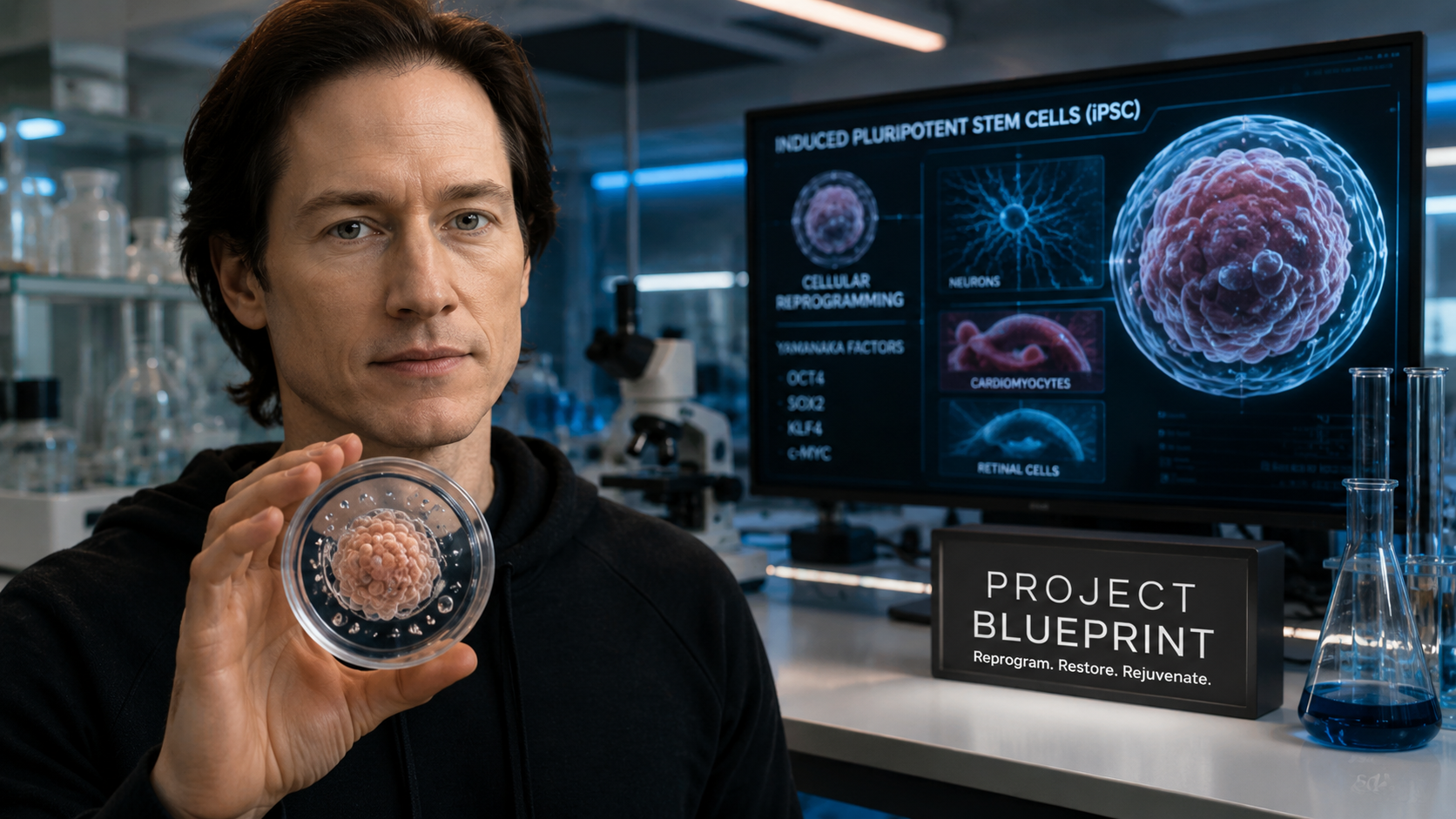
Tech entrepreneur and biohacker Bryan Johnson triggered widespread online discussion after announcing on X (formerly Twitter) that he had “cloned” himself as a newborn in a laboratory dish. The post outlined an ambition to utilize the cellular culture to grow replacement organs, test experimental therapies, and extract young cells for age-reversal protocols.
Despite Johnson’s sensational terminology, medical experts clarified that the process involves creating induced pluripotent stem cells (iPSCs) rather than full human reproductive cloning. According to Johnson, the procedure extracted adult cells from a blood draw and applied Yamanaka factors to reset their epigenetic age back to an embryonic-like state. Pluripotent stem cells can differentiate into various specialized cell lines—including neurons, cardiomyocytes, and retinal cells—offering promising avenues for regenerative research without immune rejection.
Johnson framed the milestone around his ongoing health protocols following an incurable autoimmune diagnosis, describing cellular reprogramming as a key frontier for organ repair. While iPSC technology remains a recognized scientific breakthrough, medical professionals emphasize that engineering fully functional, transplantable human organs remains in experimental stages.