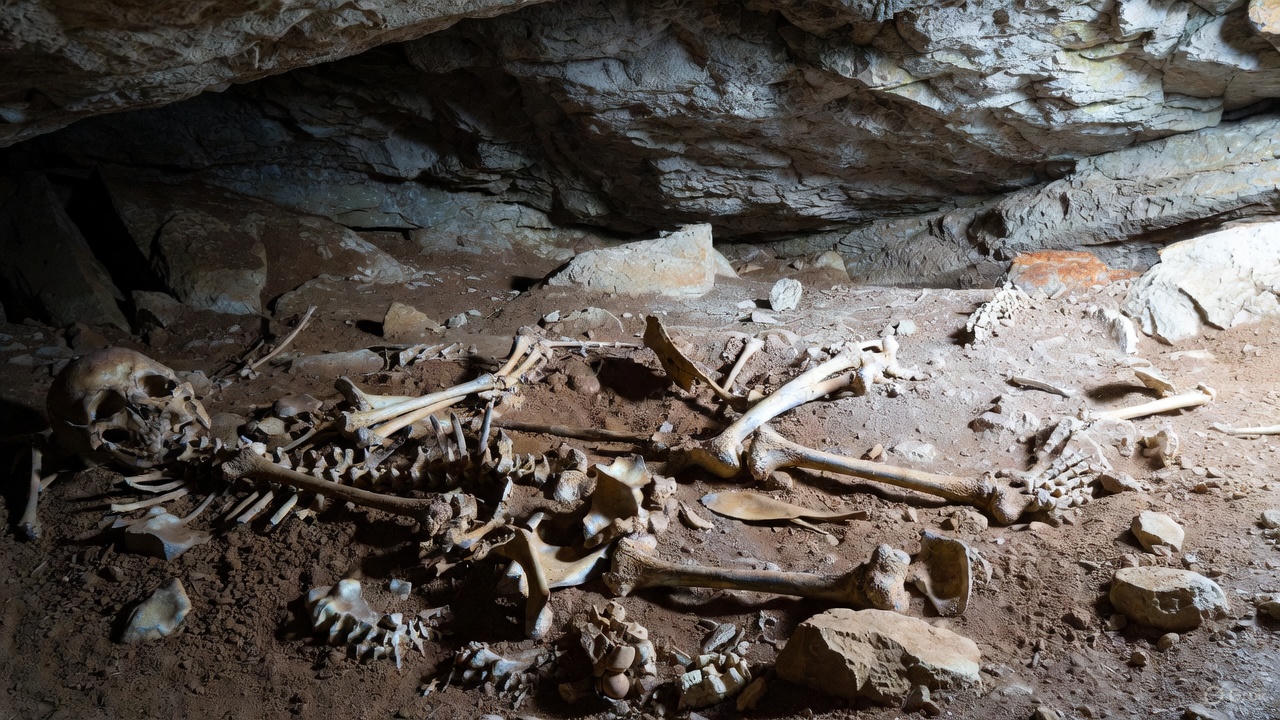
Archaeologists have identified what is being described as the oldest known archaeological evidence of incest following genetic analysis of human remains excavated at Grotta della Monaca in southern Italy. The findings were detailed in a peer-reviewed genetic study published in Communications Biology.
The cave, located in Calabria—often referred to as the “toe” of Italy—was used as a burial site during the Bronze Age, between 1780 and 1380 BC. Researchers examined DNA extracted from the skeletal remains of 23 individuals recovered from the site. Despite the fragmented and commingled condition of the bones, the team successfully identified the biological sex of 18 individuals and traced a wide range of mitochondrial and Y-chromosome haplotypes, indicating a genetically diverse community.
Among the findings, researchers detected two cases involving first-degree relatives. One case stood out as unprecedented: genetic evidence showed that a teenage boy buried at the site was born from a father-daughter union. The study described this as “an exceptionally rare and remarkable finding” and noted that it represents “the earliest identified in the archaeological record.” Notably, the boy showed no genetic disorders commonly associated with such close consanguinity.
The researchers said the discovery was unexpected, particularly because the community did not appear small, isolated, or organised around elite or royal lineages where close-kin unions are historically documented. “The reproductive union between parent and offspring observed in our study may reflect a socially sanctioned behaviour,” the authors wrote, while stressing that its broader cultural meaning remains unclear.
Study co-author Alissa Mittnik of the Max Planck Institute for Evolutionary Anthropology said the case “may indicate culturally specific behaviours in this small community, but its significance ultimately remains uncertain.”