Many of you might not know a lot about Deepfakes, or you might be new to the term. You are not aware because Deepfake in itself is not a very old term, as it was first coined in 2017. Deepfake is actually a technology that helps someone create a video just out of an image. Here, let us explore Deepfake and know all about it.
What is Deepfake

Deepfake, as a technology, is based on Artificial Intelligence, which helps in human image synthesis. The technology involves artificial intelligence and machine learning models that can manipulate video. In other words, a deep fake is a doctored video that shows someone doing or saying something that never happened.
Deepfake is a combination of deep learning and fake. It can create fake videos and make them look authentic. And it, not something very confidential or used only by intelligence agencies. With the help of online software or downloaded apps, anyone can make convincing deepfake videos. Because of these capabilities, Deepfakes have been used to create fake celebrity pornographic videos or revenge porn. Fake news and malicious hoaxes can also be created by deepfakes.
What makes Deepfakes so Fascinating
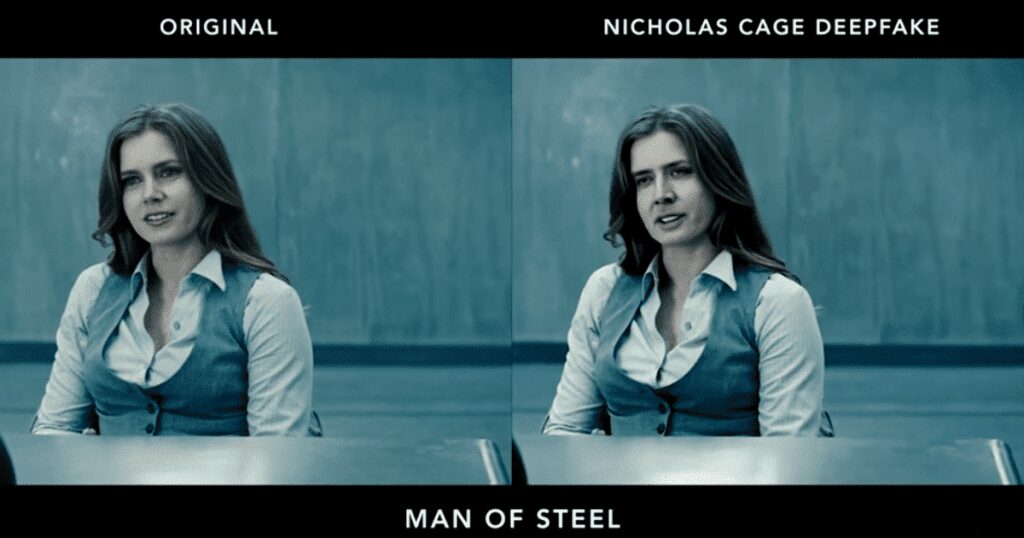
Although Deepfake might not make videos very realistic, it is very fascinating because it makes a video with just an image. The technology of creating inauthentic audio and video files that look real already exists. And those technologies are rapidly improving.
Photo editing software such as Photoshop has been commonly used to falsify images and make people believe in things that don’t even exist. Although if you use a little bit of common sense and analyze a photo, we can easily determine its authenticity.
However, until recently, video content has been more difficult to alter in any substantial way. Thus, video content is used to prove that something has actually happened. But with the development of Deepfake technology, altering video is no longer a distant thing. Moreover, the fascinating thing is that with deepfake, altering a video needs a minimum of just a photo.
How does it work?
There are several different ways to make deepfake videos, but they all require data to feed machine learning models that will generate your fake content. Currently, everyone from researchers to those with malicious intent is making deepfakes.
The most convincing ones require powerful computer rigs and deep datasets with plenty of audio, video, or pictures for the subject of your deepfake.
Social media apps like Snapchat also use face-morphing technology that could be used similarly. There are even higher-end tools like FakeApp. Made by an anonymous developer using open-source software written by Google, it lets you really generate face swaps, with little indication that your video has been manipulated. FakeApp is free, and if you are a little related to te, ch it is really very easy to use.
How good is Deepfake?

Deepfakes have been constantly developed by scientists and researchers. Over time, it has become more and more realistic. In the latest example of deepfake technology, researchers have shown off new software that uses machine learning to let users edit the text transcript of a video to add, delete, or change the words coming right out of somebody’s mouth.
The work was done by scientists from Stanford University, the Max Planck Institute for Informatics, Princeton University, and Adobe Research. The work shows that our ability to edit what people say in videos and create realistic fakes is becoming easier every day. Deepfake is in a progressing stage right now, and it is not available to consumers. But it won’t take long to become available to the public.
In a test in which the fake videos were shown to a group of 138 volunteers, about 60 percent of participants thought the edits were real. This may sound a little bit low, but only 80 percent of that same group thought the original, unedited footage was also legitimate.
How to detect Deepfakes

So far, people have used deepfake videos in pornography and satire to make it appear that famous people are doing things they wouldn’t normally do. And because these techniques are new, people often get confused about whether they are real or fake. Moreover, some deepfake seems to be extremely authentic.
There are not a lot of things that could tell that da deepfake is actually fake. So, to determine the authenticity, you could detect the blinking of the eyes. Healthy adult humans blink somewhere between every 2 and 10 seconds, and a single blink takes between one-tenth and four-tenths of a second.

That’s what would be normal to see in a video of a person talking. But it’s not what happens in many deepfake videos.
The quality of an altered image or video will depend on the image available. And to make the video look authentic, a person needs to blink, but there are not a lot of images of people with their eyes closed. So, determining the blinks is a major way to detect a deepfake video.
Conclusion
Now we know what deepfake actually is. It allows you to alter videos and make them look authentic. Some say it is illegal, and some support it as a technology. Many argue that deepfakes should be protected by the First Amendment or Freedom of Speech, whereas others have issued warnings. Using deepfakes is also not very hard in today’s data, as I have already mentioned in the article. Now, to determine if it is legal or illegal, it totally depends on you.