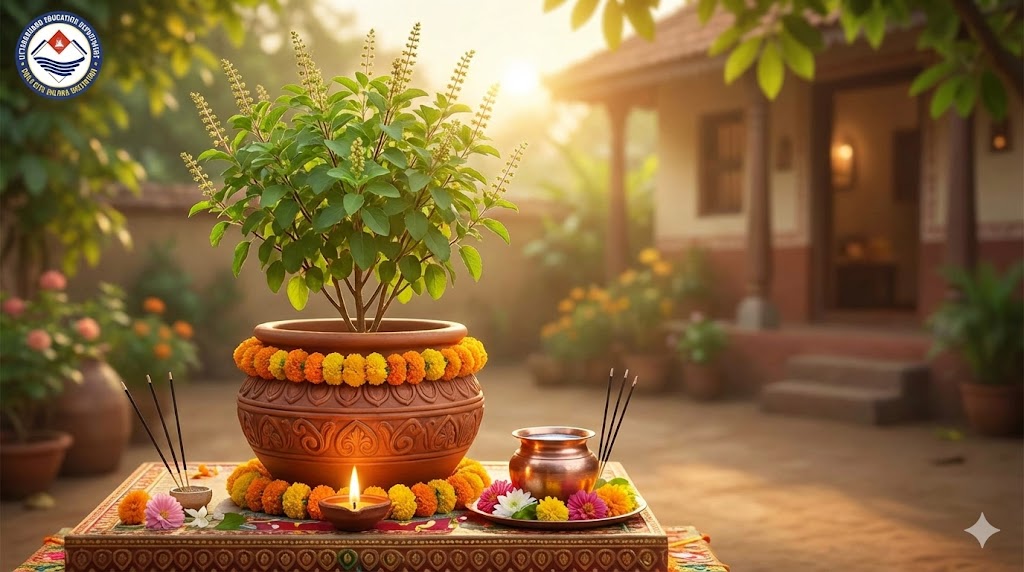
Tulsi (Ocimum tenuiflorum), also known as Holy Basil, occupies a unique and revered position in Indian spiritual, cultural, and domestic life. For centuries, households in the Indian subcontinent have placed Tulsi plants in courtyards and verandas, treating them with devotion akin to a family deity. To formalise and recognise this reverence, Tulsi Pujan Diwas has emerged in modern times as a special day dedicated to honouring the sacredness of the Tulsi plant – celebrating its spiritual symbolism, environmental value, and health significance.
What Is Tulsi Pujan Diwas?
Tulsi Pujan Diwas is an annual observance devoted to the worship of the Tulsi plant. The day is distinct in that it focuses specifically on the Tulsi plant as a living symbol of purity, devotion, and well-being, bringing together traditional values and modern awareness.
Unlike festivals that are tied exclusively to rituals in ancient texts, Tulsi Pujan Diwas represents a cultural-spiritual initiative embraced by millions of households across India and the global Indian diaspora.
Origin and Historical Background
Ancient Reverence for Tulsi
Tulsi has been celebrated in Indian spiritual traditions for thousands of years. Classical scriptures, including various Purāṇas, extol Tulsi’s sacred qualities and associate the plant with spiritual purity and protection. In many traditions, Tulsi is linked with the divine feminine, devotion, and the nurturing of household dharma.
Tulsi is found in devotional literature, folk practices, temple precincts, and personal worship routines. Every morning and evening, many households offer water and respect to their Tulsi plant, making it an integral part of daily devotional life.
Modern Establishment of Tulsi Pujan Diwas
Tulsi Pujan Diwas, as a dedicated day of commemoration, is a modern organisational and cultural initiative that gained prominence in recent decades. It is not prescribed as a fixed festival in the ancient calendrical texts, but it draws its inspiration from long-standing traditions of reverence for the plant.
The practice of designating a special day for Tulsi worship is part of wider efforts to:
- Reinforce environmental consciousness
- Encourage home worship
- Promote sustainable and health-oriented living
- Honour traditional values in contemporary society
While there’s no single person specifically known to have “started” Tulsi Pujan Diwas historically, its observance has been popularised through social and spiritual organisations, community groups, and cultural awareness campaigns across India.
When Is Tulsi Pujan Diwas Observed?
Unlike many traditional Hindu festivals that are determined by lunar dates (tithi, paksha, and masa), Tulsi Pujan Diwas is observed on a fixed date every year – 25 December – in the Gregorian calendar.
This fixed date makes it easier for communities and families to organise collective recognition and celebration, blending traditional respect with a modern calendar rhythm.
This does not contradict ancient traditions; rather, it reflects an adaptation for contemporary observance. This is similar to globally accepted days like World Environment Day or Yoga Day, where a recurring date helps reinforce awareness.
Who Observes Tulsi Pujan Diwas?
Household Practitioners
The day is most commonly observed in households that maintain a Tulsi plant domestically. Devotees of Sanatan traditions, spiritual practitioners, and people who value traditional herbal practices often take part.
Community and Cultural Groups
Schools, cultural organisations, spiritual institutions, and community groups across India promote Tulsi Pujan Diwas through educational sessions, group prayers, storytelling, and cultural programmes.
Global Indian Diaspora
Indian communities living abroad also celebrate this day to preserve cultural heritage, plant care teachings, and spiritual continuity.
Spiritual and Symbolic Significance
Tulsi occupies a unique place spiritually due to its associations with:
- Purity of mind and body
- Devotion and virtue
- Protection from negative influences
- Presence of life force and prana (vital energy)
In many spiritual narratives, Tulsi is regarded as a sacred presence that:
- Invites auspiciousness into the home
- Purifies the environment through its presence
- Acts as a focus of meditation, intention, and devotional discipline
Tulsi is sometimes poetically described as a bridge between the earthly and the divine, embodying both spiritual nourishment and practical wellbeing.
Health and Environmental Significance
Alongside spiritual value, Tulsi has recognised health benefits, supported by traditional wisdom and modern scientific studies:
- Rich in antioxidants
- Supports immune function
- Helps the body manage stress
- Exhibits anti-inflammatory and antimicrobial properties
Tulsi also contributes to:
- Improving air quality in the home
- Encouraging sustainable gardening
- Reinforcing respect for living plants and biodiversity
Rituals of Tulsi Pujan Diwas
Tulsi Pujan Diwas is observed with devotion and a set of practices grounded in simplicity, respect, and mindful attention.
Common Ritual Steps:
- Cleaning the Area
Sweep and purify the space around the Tulsi plant. - Water Offering
Offer clean water to the Tulsi plant’s roots – a symbolic act of nourishment. - Lighting a Diya (Lamp)
Light an oil or ghee lamp near the plant to invoke clarity and auspiciousness. - Flowers and Garland
Decorate the Tulsi plant with fresh flowers or a garland to show reverence. - Prayer or Mantra
Recite a prayer, hymn, or simple mantra – such as “Om Tulsi Devi Namaha” – focused on gratitude and harmony. - Circumambulation (Pradakshina)
Walk around the plant (typically three or seven times) with mindful intention. - Silent Reflection
Offer a moment of meditation or wish for well-being, peace, and harmony.
Practitioners and Participants
- Householders perform these rituals at home.
- In community settings, group prayers and spiritual talks may be organised.
- Some families include children to inculcate respect for nature from a young age.
What Is Avoided During Tulsi Pujan Diwas?
To honour the spirit of the observance, certain practices are traditionally refrained from:
- Plucking leaves unnecessarily
- Harsh handling of the plant
- Disrespectful actions or negative speech near the plant
These guidelines help reinforce mindfulness and compassion.
Today’s Relevance and Global Reach
Tulsi Pujan Diwas has grown beyond India’s borders, celebrated wherever Indian culture and spiritual practices thrive. Its focus on plant reverence aligns with global trends in:
- Environmental stewardship
- Sustainable living
- Holistic health
- Mindful daily routine
For many people, observing Tulsi Pujan Diwas is both a spiritual ritual and a commitment to wellness and ecological care.
Tulsi Pujan Diwas is a modern observance rooted in ancient reverence for the Tulsi plant. It bridges spiritual tradition with contemporary relevance – blending devotion, health awareness, and ecological respect. Celebrated annually on 25 December, it invites individuals and communities to honour life, practice mindful reverence, and preserve a timeless symbol of purity, unity, and balance.
This day reaffirms that spiritual practices can adapt and thrive in new contexts while preserving their essence — inviting respect for nature, wellbeing, and connected living.