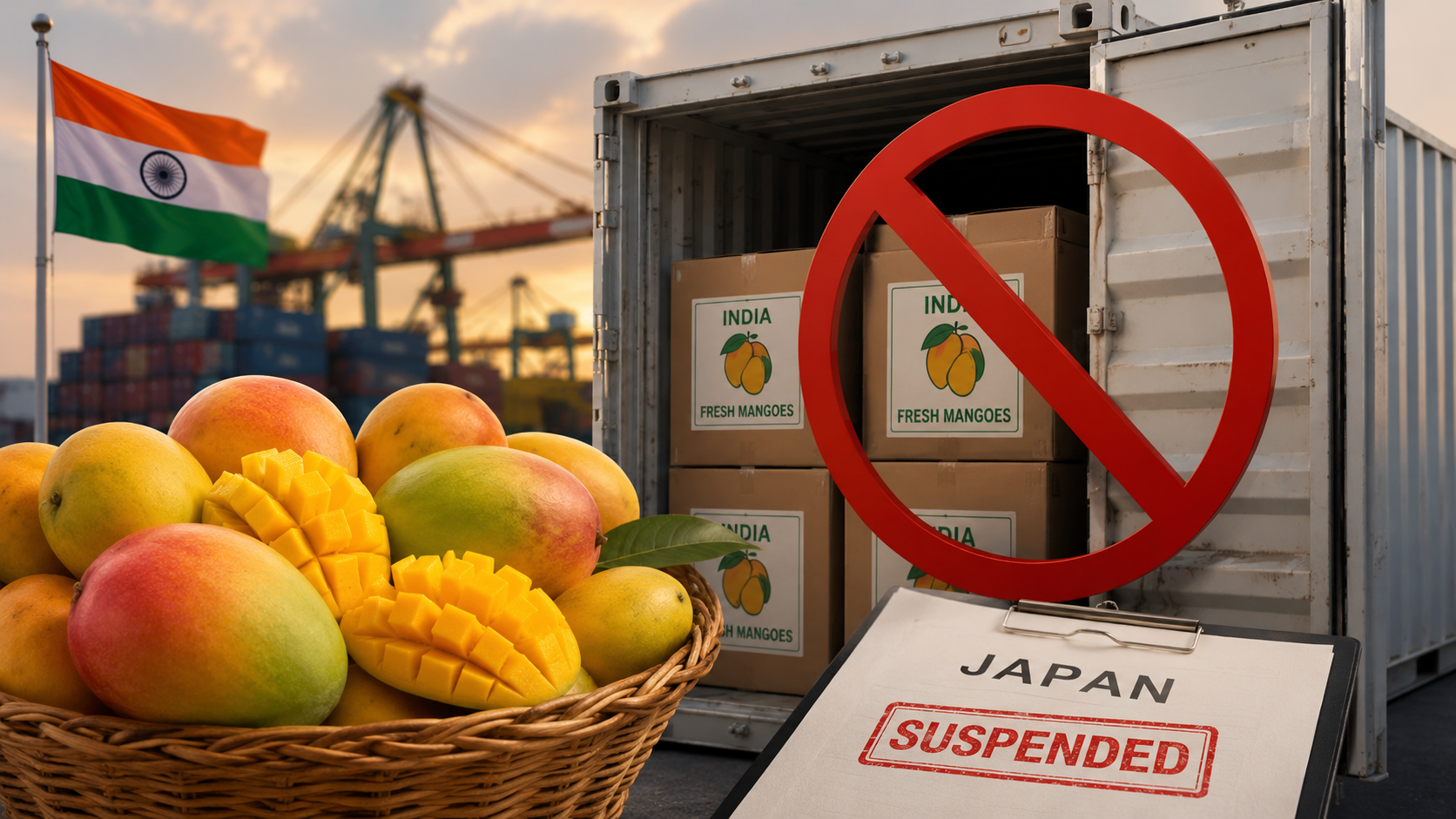
Japan has suspended imports of Indian mangoes after quarantine inspectors identified shortcomings in pest-control procedures at an approved treatment facility, disrupting shipments during the peak export season. The restriction affects several premium Indian varieties, including Alphonso, Kesar, Langra and Banganapalli, which enjoy a niche but high-value market in Japan.
The decision follows inspections conducted earlier this year by Japanese plant quarantine officials at a Vapour Heat Treatment (VHT) facility in Rehmanpur, Uttar Pradesh. Under existing export protocols, mangoes destined for Japan must undergo VHT, a process that uses controlled heat and humidity to eliminate fruit flies and other pests without chemicals.
According to reports, inspectors raised concerns related to fumigation and disinfection practices at the facility. While neither side has publicly detailed the exact technical deficiencies, Japanese authorities subsequently announced that mango consignments carrying inspection certificates issued after March 25, 2026, would not be accepted.
Japan maintains a strict zero-tolerance policy toward invasive pests, particularly fruit flies, which are considered a serious risk to domestic agriculture. The latest move marks the first major restriction on Indian mango imports by Japan in nearly two decades, after earlier curbs were lifted in 2006 following improvements in India’s treatment standards.
