Field researchers conducting excavations along the Mediterranean coast have uncovered an intact network of 18 ancient burial vaults that had remained completely undisturbed for nearly two millennia. The site, situated roughly 60 miles west of Alexandria, contains an array of funerary structures dating between the Ptolemaic and Roman eras. Investigators documented 11 complex chambers plunging over 26 feet underground alongside seven limestone vaults situated closer to the surface, one of which houses a massive 8.2-foot intact granite sarcophagus.
A primary highlight of the discovery includes an offering altar carved to mimic a false door architecture. Commenting on the structural integration, Hesham Hussein, Undersecretary for Lower Egypt and Sinai archaeology at Egypt’s antiquities ministry, noted, “The false door is one of the oldest and most recognisable elements of ancient Egyptian funerary architecture. In traditional Egyptian belief, it symbolised the interface between the worlds of the living and the dead, through which the deceased could spiritually receive offerings presented by the living.”
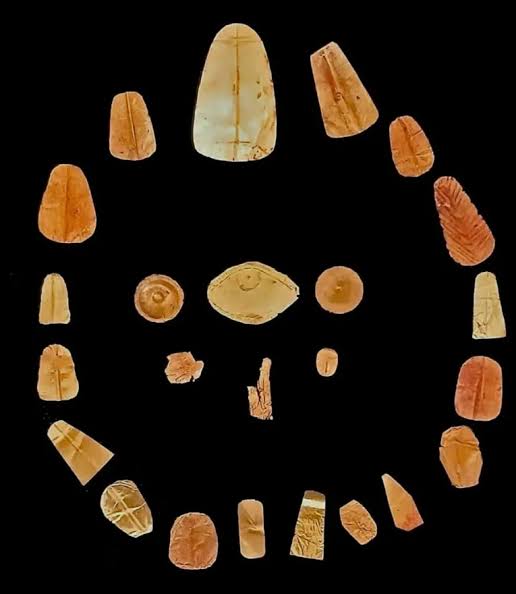
The expedition also retrieved an incomplete statue of the Greek goddess Aphrodite alongside a collection of 24 distinct gold-leaf amulets placed inside the mummies’ jaws. Elaborating on the cultural significance of the artifacts, Hussein added, “Gold tongues are a well-documented feature of some burials dating to the Ptolemaic and Roman periods in Egypt. They are generally interpreted as symbolic funerary amulets intended to enable the deceased to speak in the afterlife, particularly during the judgment before Osiris, or, more broadly, to communicate and recite sacred formulas in the next world.”