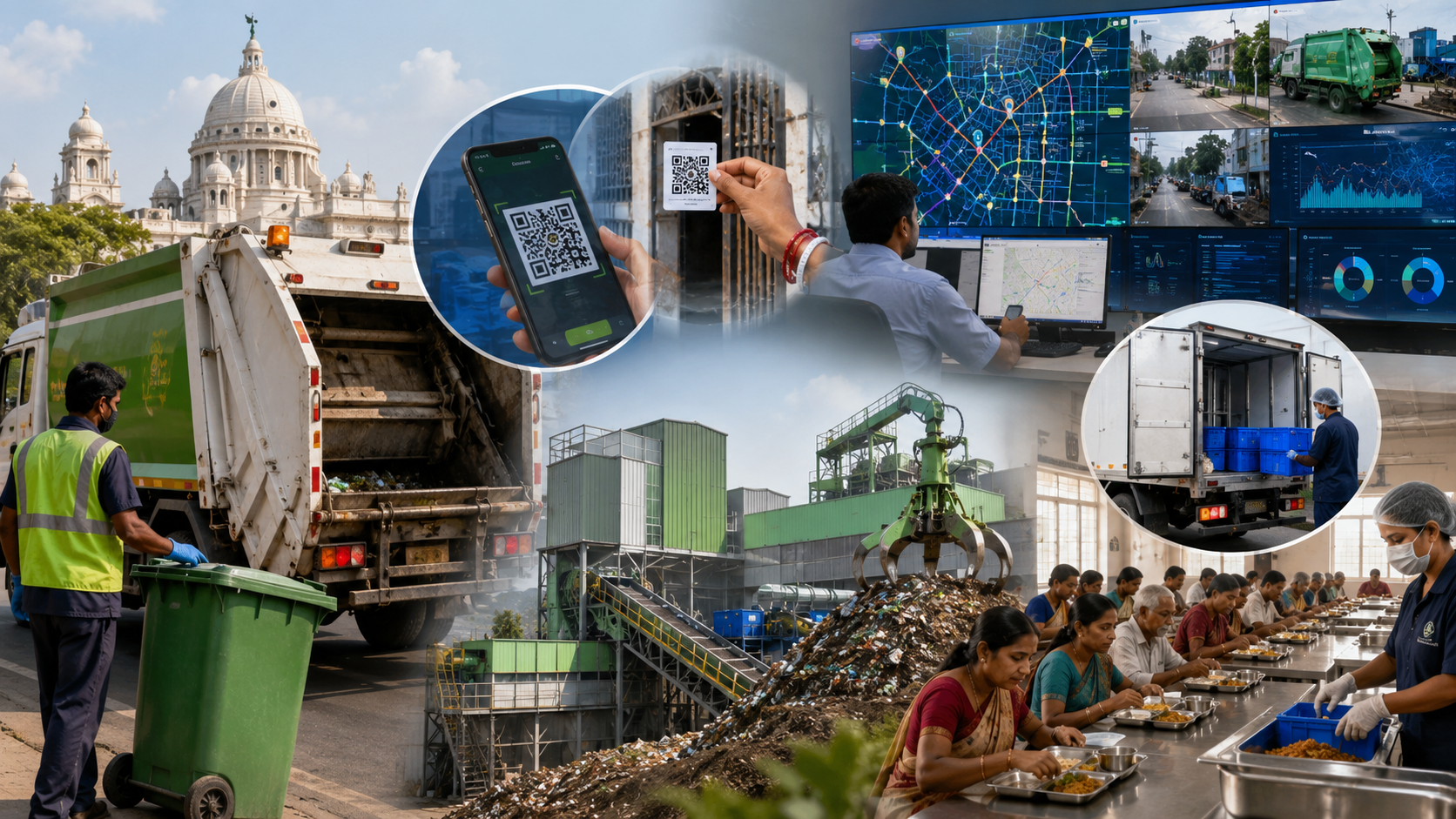
The West Bengal government has introduced a comprehensive package of municipal reforms integrating technology-driven waste management and social welfare initiatives across urban local bodies. Unveiled during the Urban Development and Municipal Affairs budget discussion in the State Assembly, the reforms aim to enhance transparency, real-time tracking, and municipal service delivery.
Under the new operational framework, households in urban areas will be assigned unique QR codes to monitor waste collection, while garbage collection vehicles will be equipped with GPS units. Department Minister Agnimitra Paul outlined the state’s environmental objectives, stating, “Our goal is to ensure 100 per cent door-to-door waste collection, complete segregation of waste at source, scientific processing of daily waste, elimination of open dumping, and scientific remediation of legacy waste. Technology will help us monitor the entire process in real time and improve service delivery”. To support processing capacity, 67 new plants are currently under construction, with a target to remediate legacy waste dumps by May 31, 2027.
Additionally, the state announced structural updates to the ‘Maa Ahar’ subsidized meal program to introduce seated dining across its 390 locations. A state-backed food recovery initiative will also establish cold-chain infrastructure to collect, test, and redistribute surplus meals from commercial venues to disadvantaged populations.