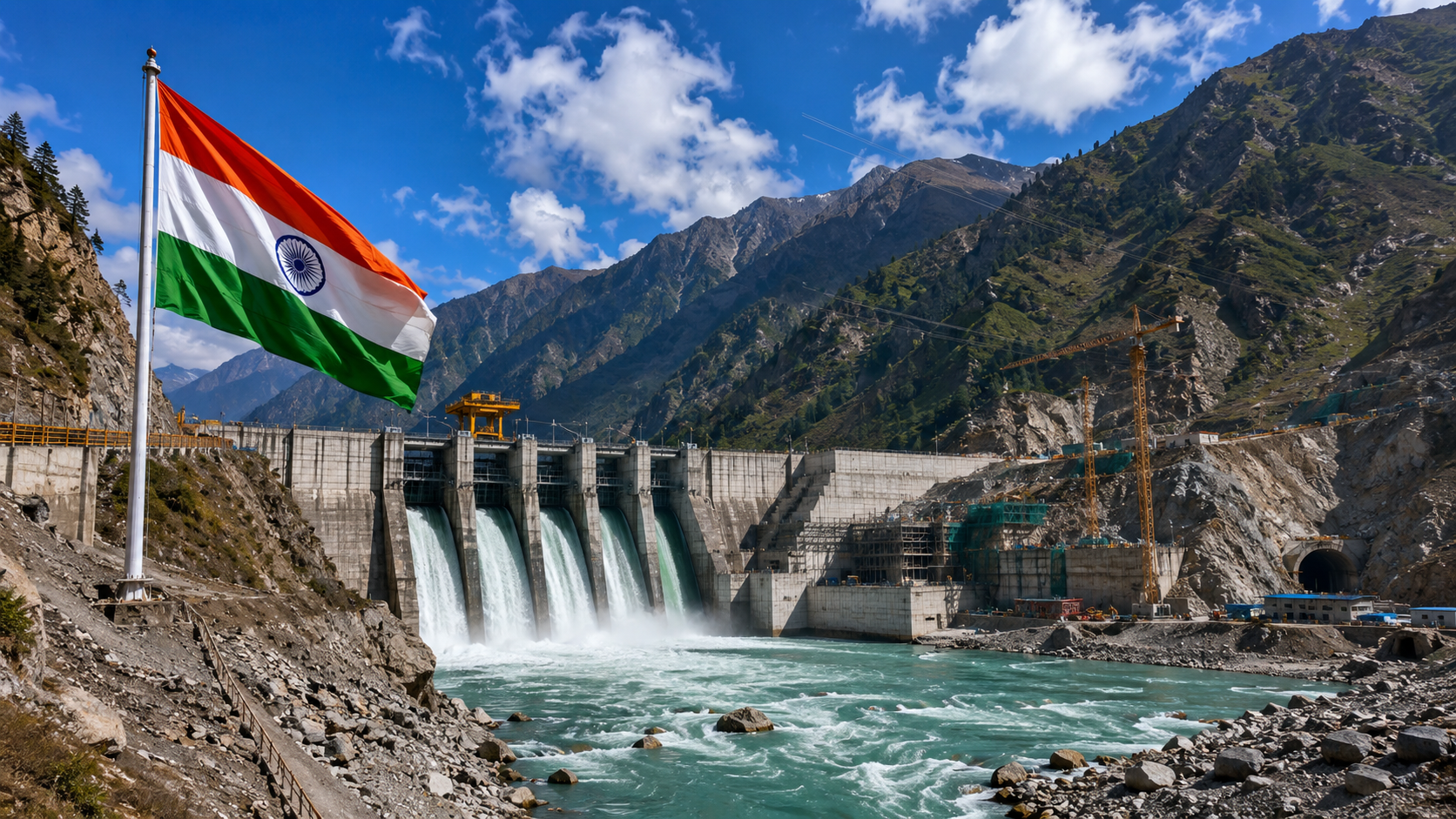
Senior government officials confirmed that India has significantly accelerated infrastructure projects across the Indus basin in Jammu and Kashmir. Following the formal suspension of the Indus Waters Treaty (IWT) in the wake of the Pahalgam terrorist attack, ongoing projects—including Pakal Dul, Kiru, Kwar, and Ratle in Kishtwar district—are projected to add roughly 5,300 MW of capacity to the region’s existing 3,300 MW of operational grid capacity. Additionally, work has resumed on the long-stalled Tulbul Navigation Project in Sopore.
Addressing foreign policy parameters, a senior official invoked raison d’etat, emphasizing that India cannot be “compelled to stay in a treaty that is demonstrably not in New Delhi’s interest”. Officials noted that any future renegotiation under Article XII(3) would require a modified format contingent on Islamabad credibly and irrevocably halting cross-border terrorism.
Highlighting water management statistics, officials refuted claims of downstream scarcity, noting that Pakistan receives 135–140 MAF annually but loses nearly 46 MAF to conveyance and allows over 30 MAF to flow unused into the sea. India also rejected the jurisdiction of the World Bank-constituted Court of Arbitration, citing procedural “institutional misjudgment” and affirming that New Delhi remains unbound by its rulings.