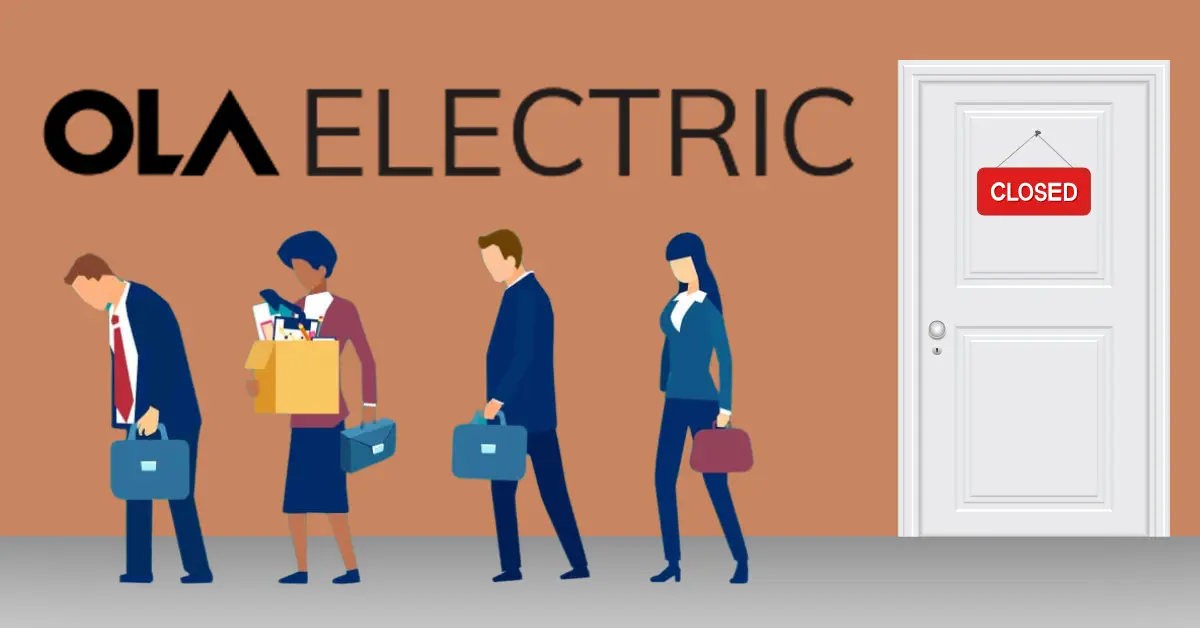
Ola Electric is set to lay off 400–500 employees in the coming weeks as part of its strategy to streamline operations and reduce costs ahead of its initial public offering (IPO), sources familiar with the matter told ET.
This decision is part of founder Bhavish Aggarwal‘s broader effort to tighten operational efficiency across the organization.
The exact number of job cuts may still be adjusted as the leadership team finalizes the scale of layoffs, which will impact various verticals within the company. Some of the affected positions might be replaced with new hires at lower costs, resulting in an overall reduction in headcount.
“Internally, the team is finalizing the list across different departments. Several teams have already determined their numbers, but the cuts will be organization-wide,” a source said.
A spokesperson for Ola Electric stated, “We do not know the layoff numbers your sources are speculating,” without providing specific comments on the impending job cuts.
As of October 2023, the S1 Pro electric scooter maker had 3,733 employees, according to its draft IPO filings. The company’s employee attrition rate stood at 47.48% in FY23. Ola Electric aims to raise Rs 5,500 crore through the sale of new shares, with its IPO application currently pending with market regulator Sebi.
In April, Ola Cabs, part of the Ola group, laid off around 200 employees. Additionally, Ola Cabs CEO Hemant Bakshi and CFO Kartik Gupta exited the company within two weeks of each other. Bhavish Aggarwal is now directly overseeing the ride-hailing business, working closely with the CXO team, including his brother Ankush Aggarwal, who moved from Ola Electric to Ola Cabs.
“The focus across the group is to achieve profitability as both the cabs and electric vehicle units prepare to go public,” a source mentioned. “That’s the mandate from Bhavish Aggarwal.”
Ola Electric reported a net loss of Rs 1,472 crore in FY23 on an operating revenue of Rs 2,631 crore. For the first quarter of FY24, it posted a net loss of Rs 267 crore on an operating revenue of Rs 1,243 crore. ANI Technologies, which operates Ola Cabs, recorded a loss of Rs 1,082 crore in FY23, with revenue growing 58% to Rs 2,135 crore. In April, Ola Cabs exited all its international markets, including the UK, Australia, and New Zealand.
The job cuts come as Ola Electric strives to maintain its leadership in India’s electric scooter market. In May, the company sold over 37,000 scooters, capturing a 50% market share. However, overall sales in April fell nearly 50% from the previous month due to seasonal slumps and shifts in industry subsidies. Ola Electric sold 33,000 units in April, maintaining leadership but down from its peak of over 50,000 units sold in March.
The electric scooter market is facing increased competition, with TVS Motors and Bajaj Auto expanding their market shares to 19% and 12%, respectively, in FY24. Bengaluru-based Ather Energy is set to launch its family scooter, Rizta, directly competing with Ola Electric, TVS, and Bajaj. Ather is also planning to raise $75–90 million in primary funding to ramp up production.
Following the end of the Faster Adoption and Manufacturing of Electric Vehicles (FAME) 2 subsidies in March, the industry has been operating under the smaller Rs 500-crore Electric Mobility Promotion Scheme (EMPS). However, a new FAME 3 subsidy with an outlay of about Rs 10,000 crore is expected to be rolled out within the first 100 days of the new government taking charge next month.