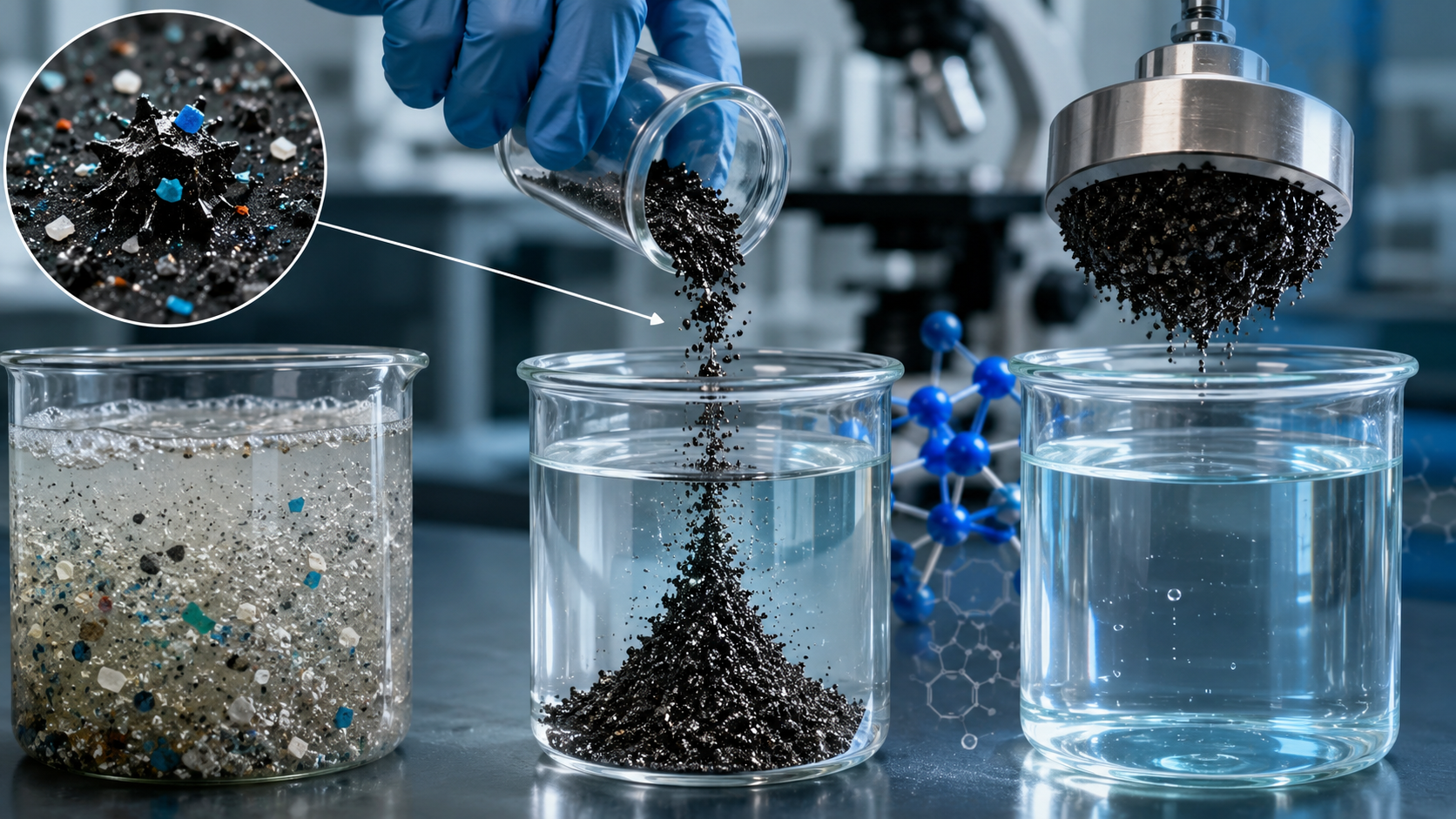
Researchers at RMIT University in Australia have synthesized a reusable magnetic adsorbent powder capable of removing over 95% of micro- and nanoplastics—including particles as small as 30 nanometers—within 60 minutes. Detailed in the Chemical Engineering Journal by lead author Dr. Muhammad Haris, Professor Nicky Eshtiaghi, and Associate Professor Nasir Mahmood, the breakthrough offers a scalable solution for catching microscopic pollutants that bypass standard municipal filters.
The room-temperature synthesis method cuts production costs by approximately 75% compared to earlier models while increasing output fivefold. In laboratory trials, the material eliminated more than 95% of heavy metals—including mercury, chromium, and copper—as well as pharmaceutical residues like ibuprofen, fabric dyes, and early-stage targeted PFAS molecules across fresh and saline water.
To overcome post-treatment recovery challenges, RMIT partnered with Canadian firm One Eye Industries, using industrial magnets to pull the pollutant-laden powder from treated water. During testing on industrial laundry wastewater, the combined system removed over 88% of polyester microfibres alongside liquid dyes, enabling immediate material recovery and reusability. Commercial field testing is expanding globally through partnerships targeting municipal networks, stormwater runoffs, and manufacturing facilities.