SUMMARY
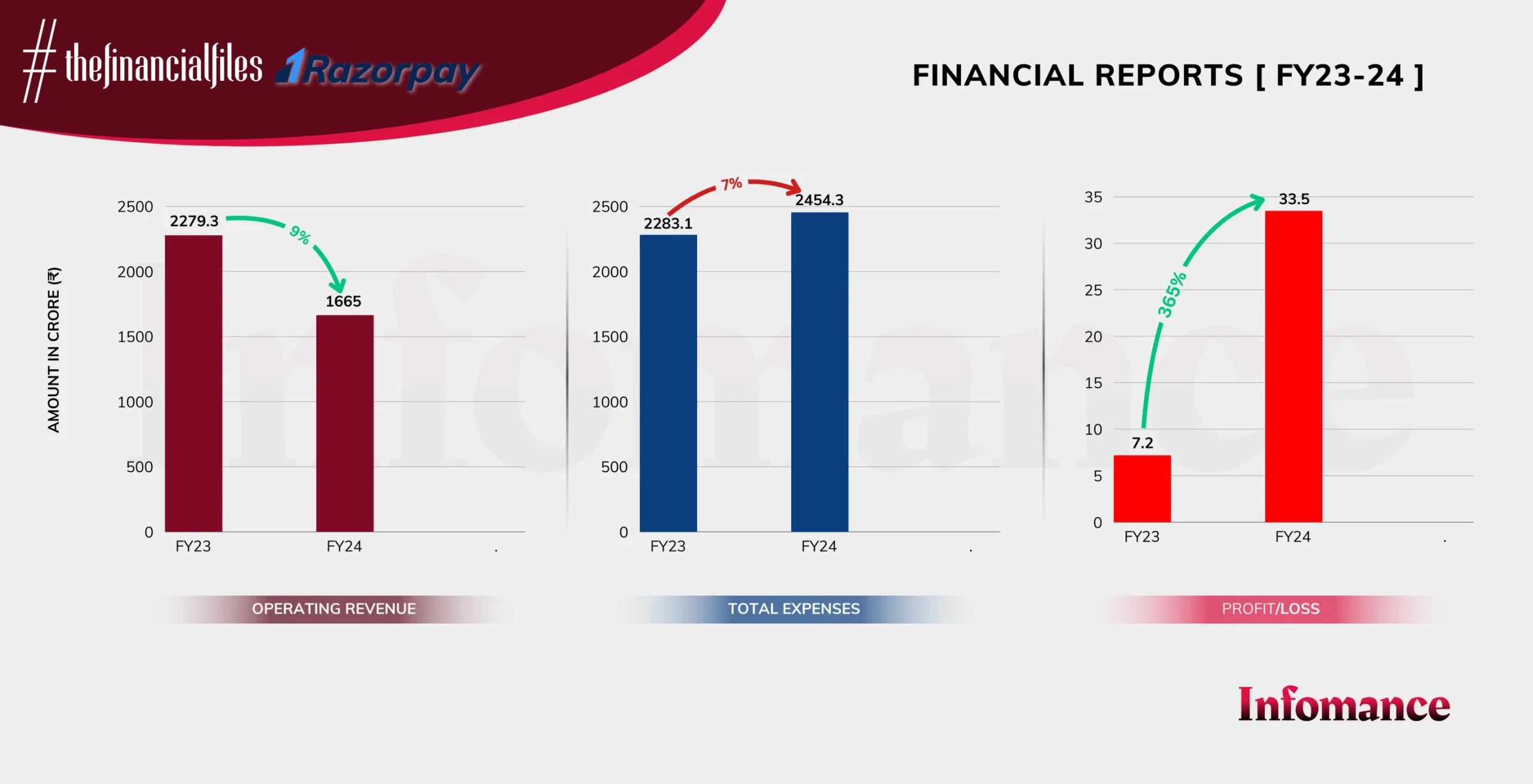
- Razorpay’s profit surged 365% YoY to Rs 33.5 crore in FY24.
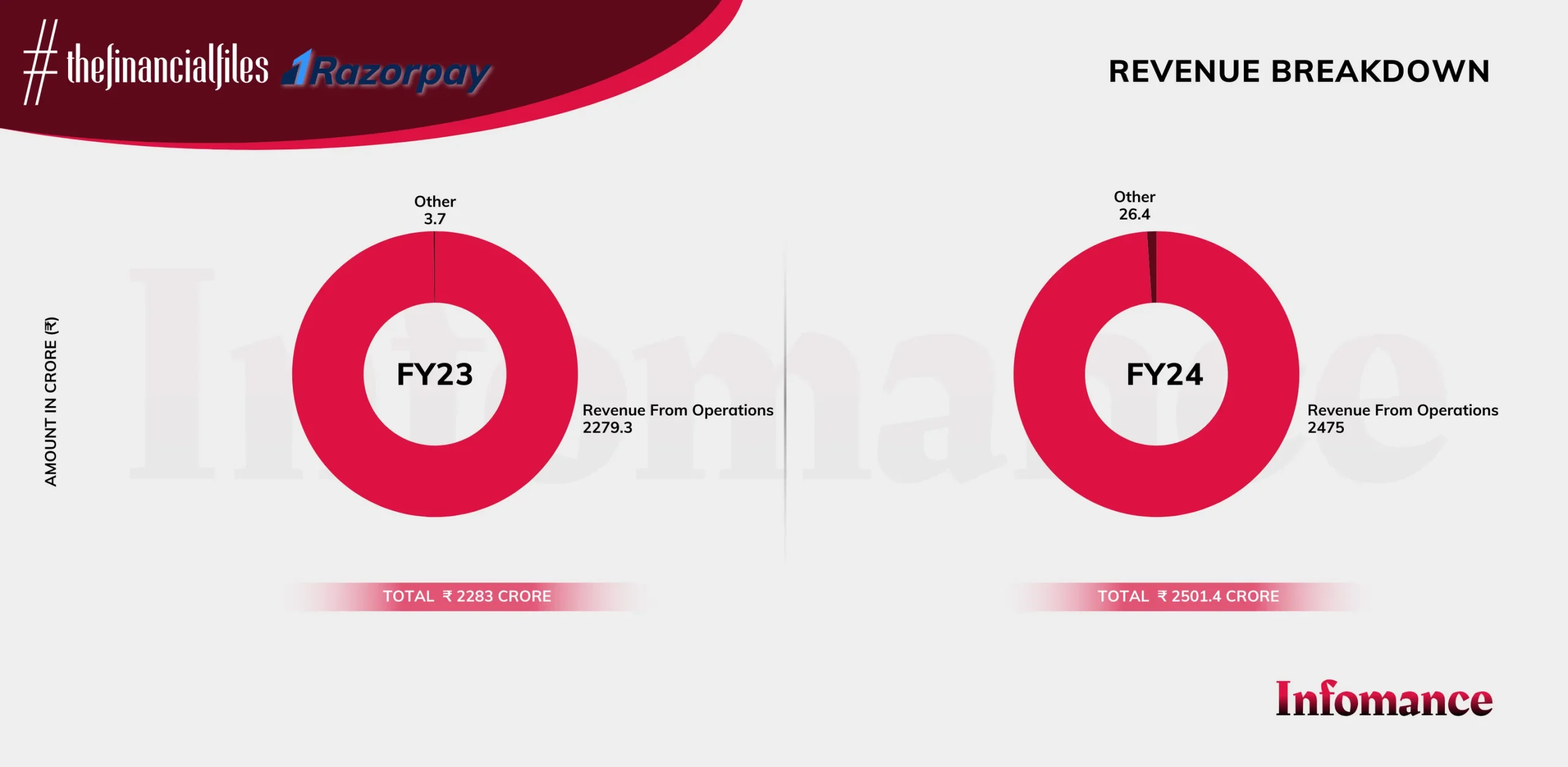
- Its operating revenue rose by 9% to Rs 2,475 crore.
- The company’s total expenses amounted to Rs 2,454.3 crore.
Updated: November 8, 2024
Fintech major Razorpay’s profit surged 365% YoY to Rs 33.5 crore from Rs 7.2 crore in FY23. Its operating revenue rose by 9% to Rs 2,475 crore from Rs 2,279.3 crore in FY23.
The majority of Peak XV-backed Razorpay’s income comes from the fees it charges for online payment services to merchants, earning Rs 2,068.1 crore from these services, which accounted for 83% of the company’s total operating revenue in the year under review.
Beyond these fees, the Bengaluru-based company’s total revenue was Rs 2,501.4 crore, rising 9% from Rs 2,283 crore in FY23.
Established in 2014 by Shashank Kumar and Harshil Mathur, Razorpay offers a comprehensive platform for payments and banking. Over the years, the company has expanded its services to include SME payroll management, banking, lending, payments, insurance, among others.
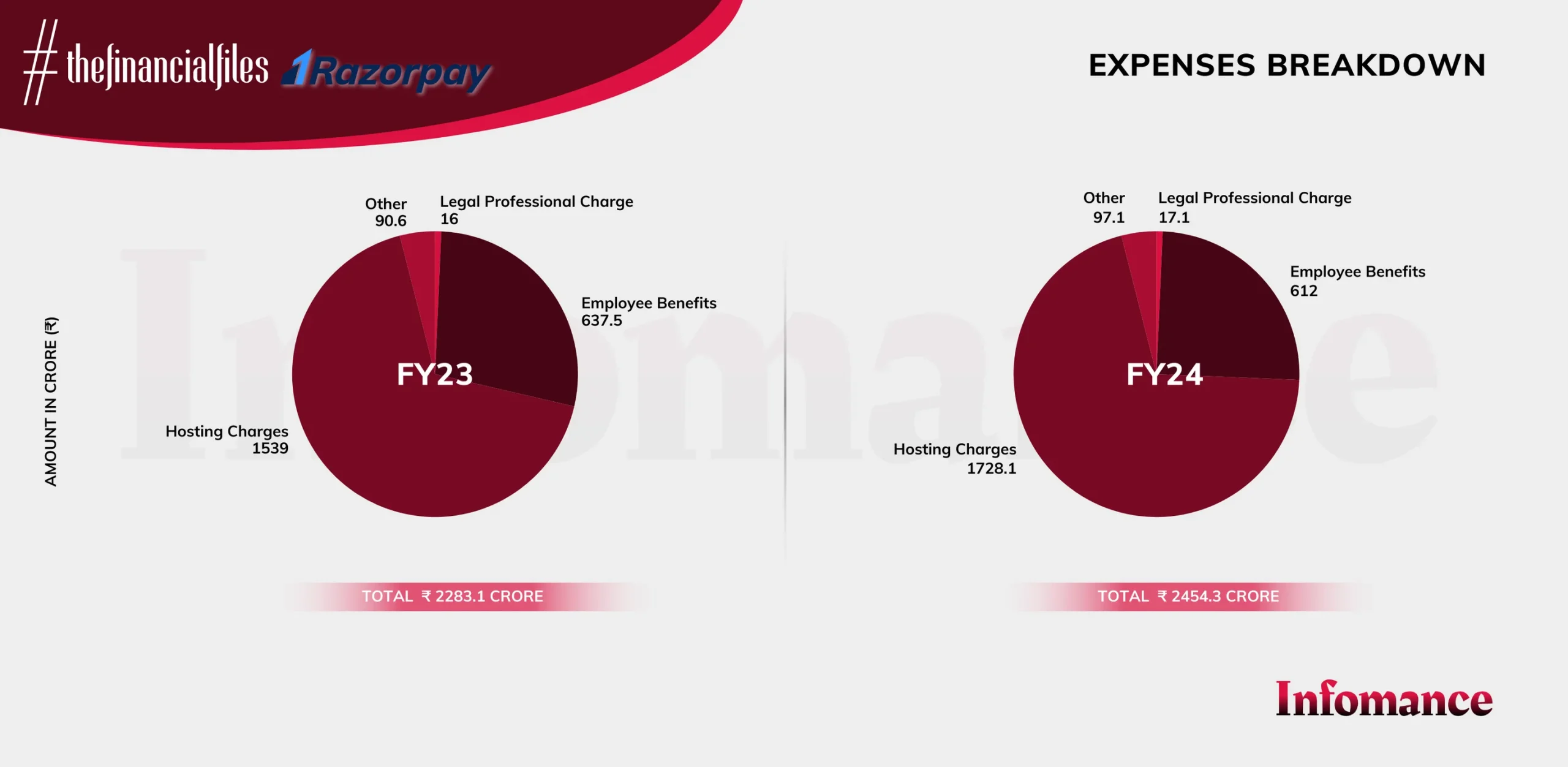
Razorpay managed to keep its expenses in check throughout the year, with its operating revenue growth outpacing its expenditure. The company’s total expenses amounted to Rs 2,454.3 crore, with a 7% rise from Rs 2,283.1 crore in FY23.
The expenses related to hosting services increased by 12% to Rs 1,728.1 crore from Rs 1,539 crore. This cost also includes advertising expenditure, making the largest expense category.
The company saw a slight decrease in its employee costs as it spent Rs 612 crore in FY24, a 4% drop from Rs 637.5 crore in FY23, indicating a possible reduction in the number of employees.
The company spent Rs 17.1 crore on legal professional fees in FY24 rising 7% YoY from Rs 16 crore in the previous fiscal year.
Razorpay’s cash and cash equivalents amounted to Rs 902 crore in FY24, 1.2% lower than Rs 913.5 crore in FY23.
The company has raised more than $740 million, attracting investors like GIC, Tiger Global, and Lightspeed Ventures. In its most recent round of funding in December 2021, it secured $375 million, valuing the company at $7.5 billion.
Earlier in the year, the company’s in-store payment arm, Razorpay POS, introduced Q-Zap, a solution designed to cut down on the time it takes for retailers to process payments. Recently, it unveiled DataSync, a platform that allows businesses to access real-time data, facilitating better financial reporting and enhancing the ability to detect fraud.
Razorpay is among the rising number of Indian tech startups that are moving their headquarters back to India to leverage the tax benefits and list their shares on the country’s stock exchanges. According to reports, the fintech will be required to pay $200 million (Rs 1,600 crore ).
Original: October 29, 2024
Payment and business banking platform Razorpay reported a 24% YoY increase in revenue for its Payment Gateway (PG) division, despite a brief pause in new merchant sign-ups during the first nine months of the year. Notably, the company saw its profit after tax increase by nearly five times in the same timeframe.
In a statement, Razorpay Software Private Limited (RSPL), the company behind the Payment Gateway business, saw its revenue surge to Rs 2,068 crore, with a total income of Rs 2,501 crore during this period.
The fintech firm’s total revenue amounted to Rs 2,293 crore in FY23, which included revenue from both the Payment Gateway and other divisions. This year marked the first time the company reported earnings from its Payment Gateway business alone in Razorpay Software Private Limited (RSPL).
Following the RBI’s approval of the Payment Aggregator (PA) license on December 22, 2023, Razorpay began onboarding new merchants, positioning itself as one of the leading platforms to receive this regulatory nod. This move led to a significant increase in profit after tax, rising to Rs 34 crore in FY24 from Rs 7 crore in FY23.
The company credited its success to a focus on developing new products, launching over 40 solutions that improved its service offerings to existing clients. Razorpay also claimed to have achieved an annualized Total Payment Volume (TPV) of $180 billion.
The company’s total expenses increased by just 7% YoY to Rs 2,454 crore in the year under review. The bulk of these expenses, around 25%, were attributed to employee benefits, which amounted to Rs 611 crore.
Razorpay is planning to expand into international markets in Southeast Asia and continue its strategy of offering services across multiple channels.
The company has secured over $800 million in funding and is currently valued at approximately $7 billion. It competes with other fintech firms such as Cashfree, which reported a revenue of Rs 614 crore in FY23, and PayU, which saw its revenue grow to $400 million (3,320 crore) in the same fiscal yea while its financial results for FY24 are yet to be disclosed.