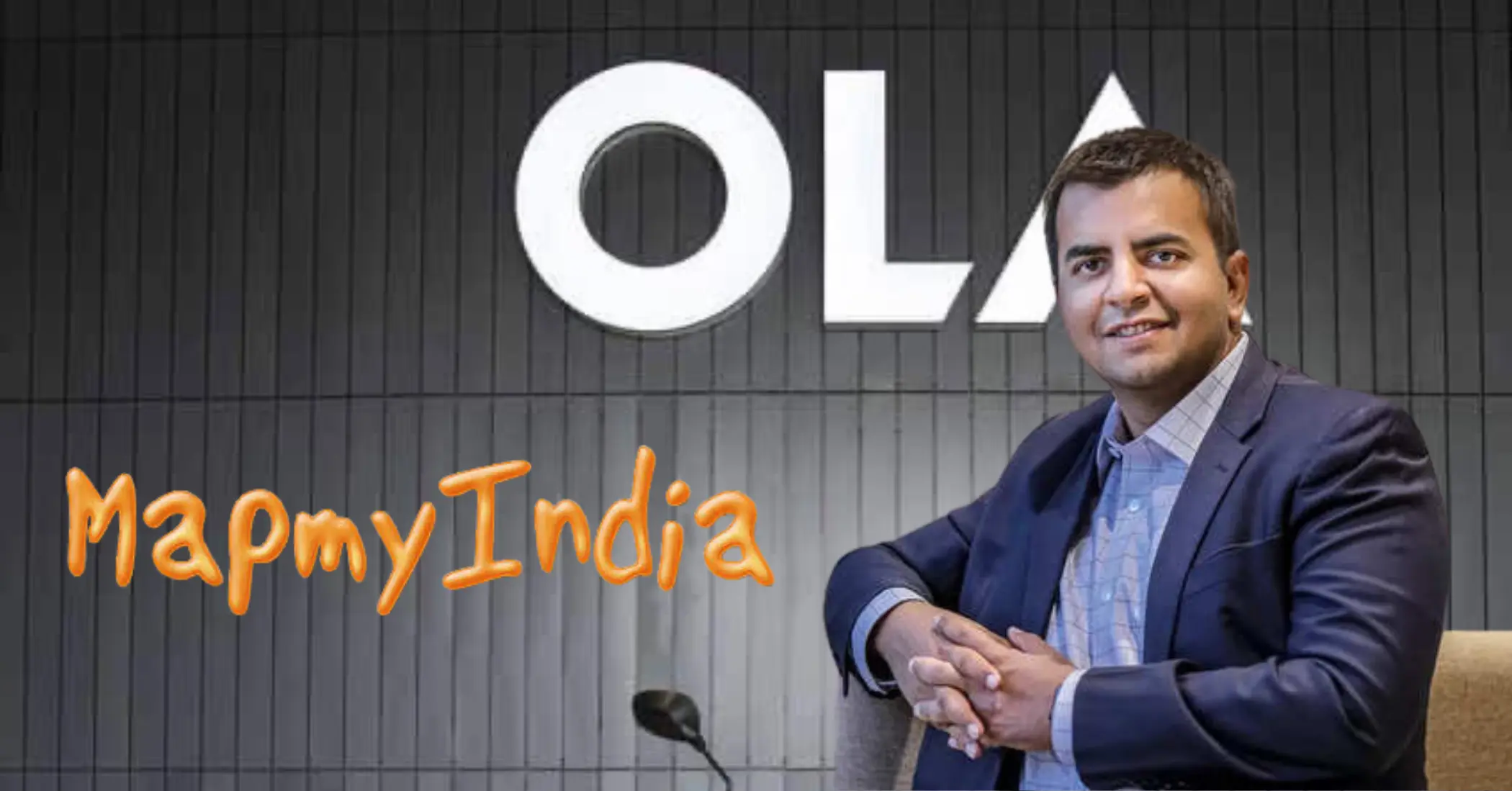
Ola Electric CEO Bhavish Aggarwal has called geotech company MapmyIndia’s parent company CE Info Systems’ move to send a legal notice to the EV startup “opportunistic”. The former accused the latter of illegally copying its data to build its Ola Maps interface and sent a legal notice for co-mingling and reverse engineering its licensed product.
The two had signed an agreement in June 2021 allowing Ola Electric the license to access MapmyIndia’s data.
A company spokesperson commented, “We would like to state unequivocally that these allegations are false, malicious, and misleading. Ola Electric stands by the integrity of its business practices. We will suitably respond to the notice shortly.”
The Bengaluru-based EV company is seeking public listing at a time when its losses are growing as its net loss for FY24 was 7.6% more YoY at Rs 1,584.4 crore from Rs 1,472.1 crore in FY23. Its IPO is set to debut on August 2 and close on August 6 with a price band of Rs 72-76 apiece, aiming to raise Rs 6,145.6 crore.
Ola Electric’s topline also surged 90% to Rs 5,009.8 crore. Its total expenses jumped 60% YoY to Rs 6,277.4 crore from Rs 3,883.4 crore. The cost of material consumed increased by 75% from Rs 2,504.8 crore in FY23 to Rs 4,390.9 crore in FY24.
The imported supplies with majority of it being sourced from China, accounted for 37.03% of the total material cost in FY24 against 31.11% in FY23. Domestic supplies contributed 62.97% of the total material cost against 68.89% last year.
Aggarwal stated that the dependency on China for processing raw materials to build cell components (midstream process) will shrink in long term. He added that the company is looking to bring the process of assembly of battery cells (Level I) to India via its Gigafactory along with the midstream process subsequently. Additionally, he praised the government’s decision to quash custom duties as it should benefit the startup’s push to endorse indigenous battery production.